latent diffusion from scratch
Rectified-flow latent diffusion, MMDiT-style, written from the paper up. PyTorch.
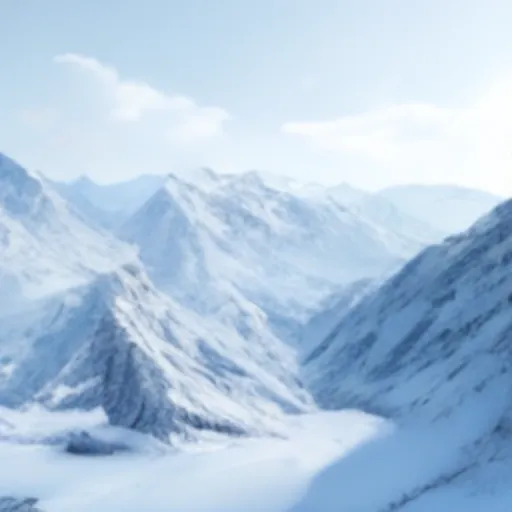
A 256px sample from my trained checkpoint.
A from-scratch text-to-image diffusion model trained with rectified flow (flow matching) in a frozen VAE latent space, conditioned on CLIP text embeddings through a stack of joint-attention transformer blocks.
how it works
The pipeline never touches pixels during denoising; everything happens in latent space. Images are compressed with a frozen sd-vae-ft-mse VAE into (4, 32, 32) latents and patchified into 256 tokens of dim 16. Prompts are embedded with frozen CLIP. A stack of joint-attention blocks predicts the rectified-flow velocity: each block concatenates image and prompt tokens and runs a single scaled-dot-product attention over them, with sinusoidal timestep embeddings and learned positional embeddings added in.
Training samples a time t, forms x_t = (1 - t) * x0 + t * x1, predicts the velocity, and regresses to v = x1 - x0 with MSE. Classifier-free guidance is learned by dropping the prompt 10 percent of the time. Sampling Euler-integrates the velocity field in latent space with guidance, then decodes once through the VAE.
the long version
This is the fifth iteration over eight months. The earlier attempts would not train stably until I rebuilt the data pipeline so the latents matched what the model expected at sample time. I wrote up the full story, including the bugs that cost me weeks, in a blog post.